Many of the systems that run your business, such as order processing, billing, inventory and field operations, were built years ago and still do their job. The challenge is that every new requirement takes longer to deliver, fewer people understand the code, and connecting to modern platforms feels like a workaround. Legacy application modernization doesn't have to mean betting the business on a multi-year rewrite. There is a steadier path.
Why "Rip and Replace" Is So Tempting, and So Hard
When a core system becomes difficult to change, a full rewrite sounds like the cleanest answer: we know what the old system does, so let's build the same thing on a modern stack. In practice, that plan tends to be harder than it looks.
As Martin Fowler puts it in his well-known essay on the subject, replacements "seem easy to specify, but often it's hard to figure out the details of existing behavior." Years of business rules live inside legacy code, often undocumented. Some of that behavior is essential; some of it nobody needs anymore. Meanwhile, a long replacement project asks the business to wait for new features until the new system is ready, and markets rarely wait.
That doesn't mean a rewrite is never right. For a small, well-understood application, replacing it outright can be the simplest option. But for large systems deeply woven into daily operations, many engineering teams now prefer a more gradual approach.
The Incremental Alternative: The Strangler Fig Approach
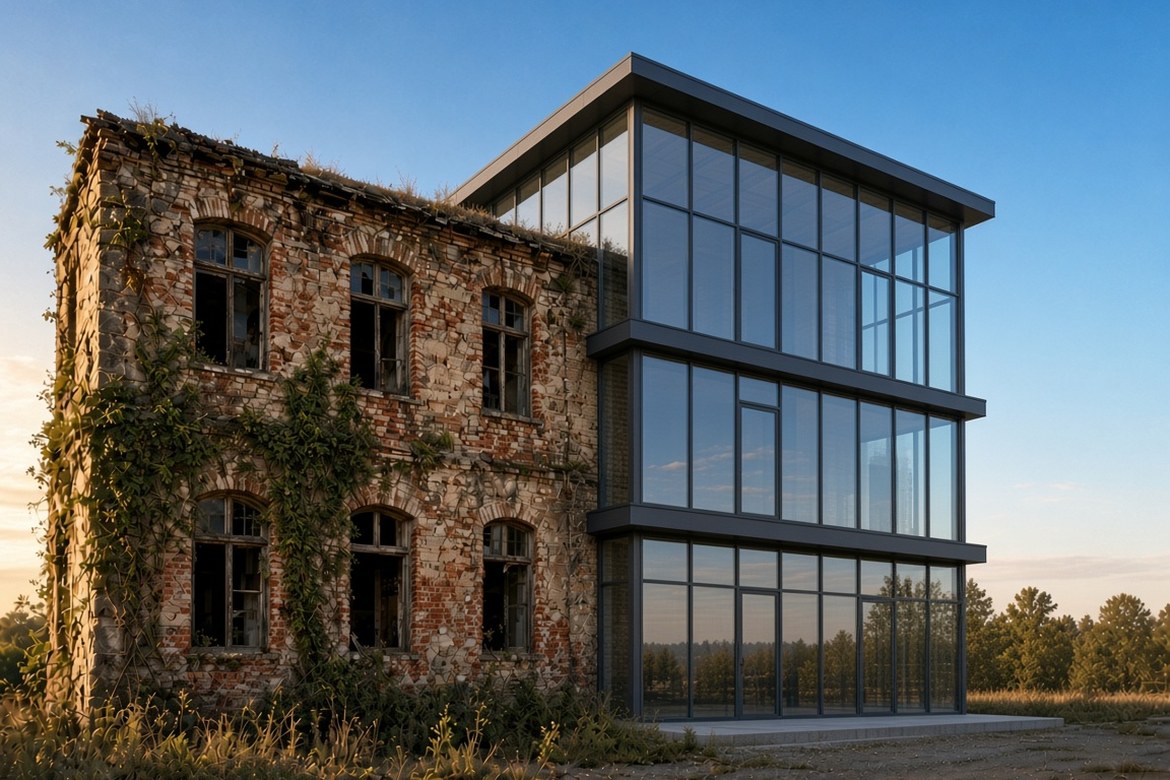
The name comes from a vine that grows around a host tree, gradually taking over its shape. Applied to software, the idea is simple: instead of replacing the legacy system in one move, you build new capabilities alongside it and move functionality over piece by piece, until the old system can be retired.
How It Works in Practice
Microsoft's Azure Architecture Center describes the pattern in four broad stages:
- Introduce a façade. A routing layer sits between users (or client applications) and the back end. At first, it sends almost everything to the legacy system.
- Shift functionality step by step. As each new service is built and validated, the façade routes more requests to it. Users keep the same experience while the migration happens behind the scenes.
- Decommission the legacy system. Once all functionality has moved and no dependencies remain, the old system can be switched off.
- Remove the façade. Client applications talk directly to the new system, or the façade stays as an adapter for older clients.
The trade-off is that you will build some transitional architecture: code and integrations that exist only while old and new systems coexist. That can look like extra cost, but it buys something valuable: lower risk, earlier returns on investment, and the ability to learn and adjust as you go.
Choosing the Right Path for Each Application
Not every system in your portfolio deserves the same treatment. Cloud providers often frame these choices as a set of strategies. AWS, for example, describes "7 Rs": retire, retain, rehost, relocate, repurchase, replatform, and refactor or re-architect. A practical portfolio review usually lands on a mix:
A Practical Roadmap for Leaders
Whatever mix you choose, a few principles help modernization efforts stay on track.
1. Start With Business Outcomes
"Modernize the ERP" is not an outcome. Faster pricing changes, a self-service customer portal, or easier onboarding of new developers are. Agree on a short list of outcomes early, and revisit them regularly so business and IT stay aligned on priorities.
2. Map the System and Find the Seams
Legacy applications rarely have clean boundaries. Spend time understanding how the system supports different business capabilities, such as quoting, invoicing or reporting, and identify natural points where one capability can be separated from the rest. Those seams become your first candidates for migration.
3. Deliver a First Slice and Learn
Pick a piece that is valuable but contained. Delivering it end to end, including routing, testing, monitoring and user feedback, teaches the team more about the legacy system than months of analysis. Each slice makes the next one easier to estimate.
4. Plan for Data From Day One
Data is often the hardest part. Old and new components may need to read and write the same information for a while. Techniques such as change data capture, which streams changes from the legacy database to new data stores, and careful validation before each cutover help keep both sides consistent. Treat removing legacy tables as a deliberate final step, not an afterthought.
5. Evolve the Team and the Practices
Systems tend to mirror the organizations that build them. If the processes that produced a brittle system stay the same, the new one can drift the same way. Automated testing, continuous integration and delivery, clear ownership of each service, and regular releases help keep the modernized platform easy to change.
Where AI Fits In
AI-assisted engineering tools are becoming a useful companion in modernization work. Teams increasingly use them to summarize unfamiliar code, draft documentation for undocumented modules, suggest tests that capture how the current system behaves, and speed up repetitive translation tasks. The key is to treat AI output as a starting point that experienced engineers review and validate, especially where business rules are involved. Used this way, AI can help teams understand legacy behavior faster without changing the fundamentals of a careful, incremental plan.
A Common Scenario
Consider a pattern that appears across many industries. A distributor runs its order management on a long-standing, data-intensive business application. It works, but the company wants a customer portal and a mobile app for its sales team, and every change to the core system is slow.
Rather than rewrite everything, the team places an API layer in front of the existing system so new applications can use it right away. Next, it builds a new pricing service, routes pricing requests to it through the façade, and keeps data synchronized until the new service is validated. The legacy pricing module is then retired, and the team moves on to the next capability. The business gets new features early, and each step carries a manageable level of risk.
How TISA Software Can Help
For around two decades, TISA Software has helped organizations build, extend and modernize the software that runs their business. As an AI-first software engineering company with offices in Houston, Texas and Buenos Aires, Argentina, and an ISO 9001:2015-certified quality management system, we bring together:
- Software Factory teams that can take ownership of modernization workstreams, from APIs and new services to web and mobile front ends.
- Staff augmentation to add experienced developers and specialists to your existing team when you need extra capacity.
- Platform experience across .NET, Java, Python, mobile, Microsoft SharePoint, Dynamics CRM and Four Js Genero for data-intensive business applications.
- AI-assisted engineering practices that help our teams understand, document and test existing systems more efficiently.
If a core system has become hard to change, we'd be glad to talk through your options and help you find a sensible place to start. Contact us to start the conversation.